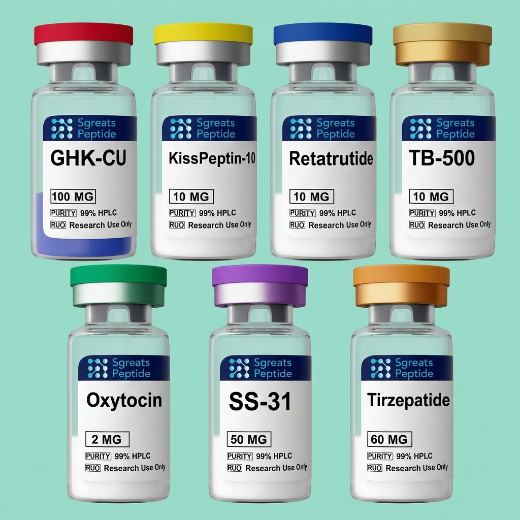
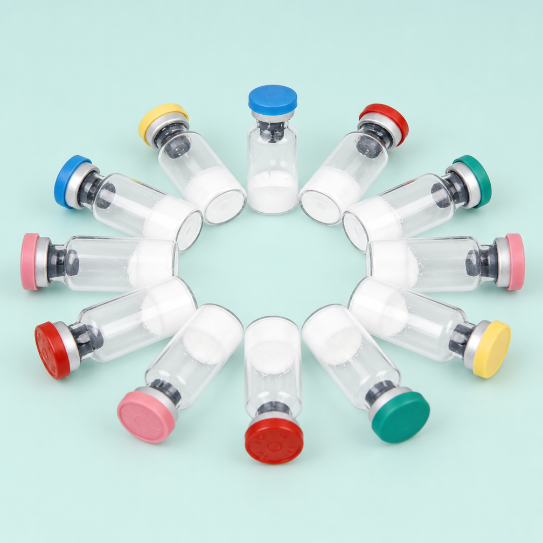
Research Peptide Vials
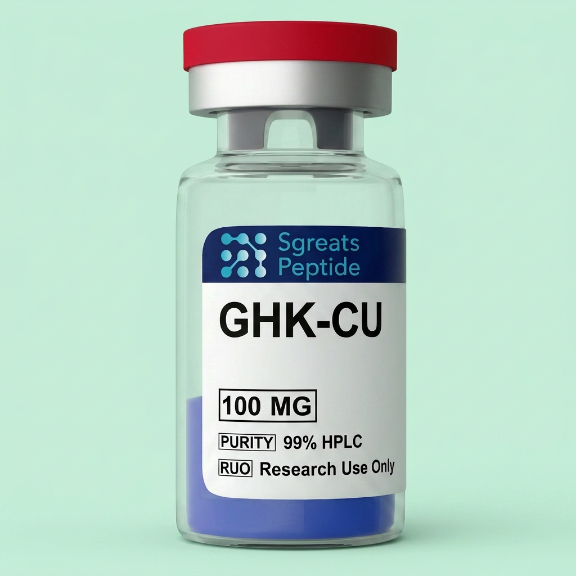
GHK-CU
GHK-Cu, also known as [N2-(N-Glycyl-L-histidyl)-L-lysinato(2-)]copper or Copper tripeptide, is a naturally occurring tripeptide. It was first isolated from human plasma but can be found in saliva and urine. During wound healing, it may be freed from existing extracellular proteins via proteolysis. Studies have shown that GHK-Cu has a maximal biological effect at 10-9 mol/L and Its concentration in the body decreases with age.
Product Name: | Copper tripeptide |
Synonyms: | [N2-(N-Glycyl-L-histidyl)-L-lysinato(2-)]copper;Ghk-Cu/AHK-CU;Copper tripeptide (GHK-Cu);Prezatide copper,[N2-(N-Glycyl-L-histidyl)-L-lysinato(2-)]copper;tripeptide/GHK-Cu;Copper peptide, GHK-Cu, Copper tripeptide-1;GHK Copper;GHK.CU.HAC |
CAS: | 89030-95-5 |
MF: | C14H21CuN6O4 |
MW: | 400.91 |
EINECS: | 1308068-626-2 |
The human copper-binding peptide GHK-Cu (glycyl-l-histidyl-l-lysine) is a small, naturally occurring tri-peptide present in human plasma that can also be released from tissues in case of an injury. Up-to-date, it is established that GHK-Cu is able to:
Tighten loose skin and reverse thinning of aged skin
Repair protective skin barrier proteins
Improve skin firmness, elasticity, and clarity
Reduce fine lines depth of wrinkles, and improve the structure of aged skin
Smooth rough skin
Reduce photodamage, mottled hyperpigmentation, skin spots and lesions
Improve overall skin appearance
Stimulate wound healing
Protect skin cells from UV radiation
Reduce inflammation and free radical damage
Increase hair growth and thickness, enlarge hair follicle size